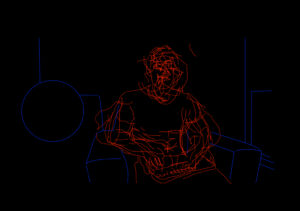
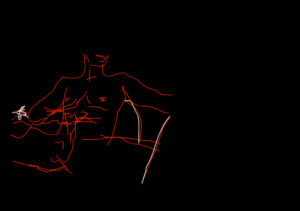
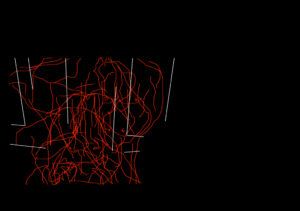
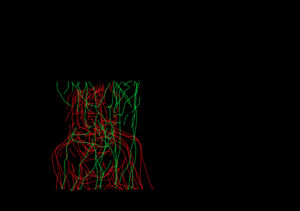
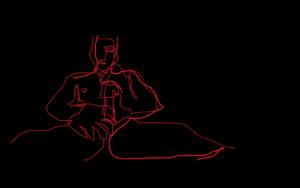
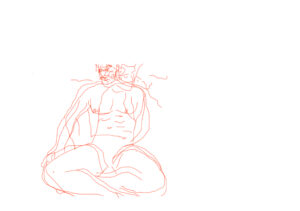
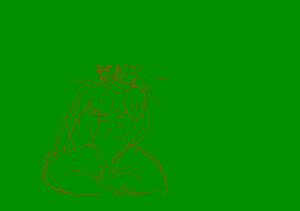
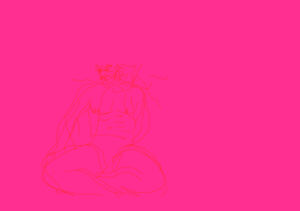
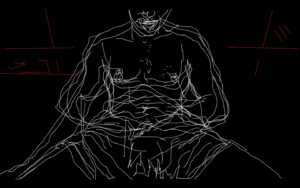
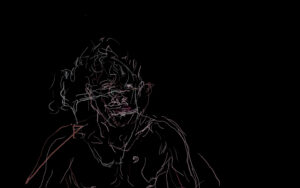
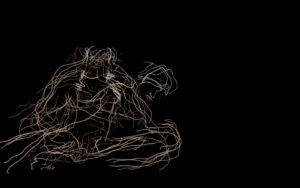
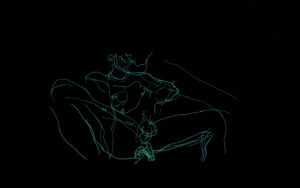
the fAce you hAVe tOdaY Won’t belong tO you (c4MbOys)
2016 – On going
digital drawings
There are, in fact, moments when a person stands out from his grandeur in clarity and silence before you. These are rare festive pleasures that you never forget. You love this person from then on. In other words, you work to retrace with your own tender hands the outlines of the personality that you came to know in this hour.
Rainer Maria Rilke, Notes on the Melody of Things, 1898
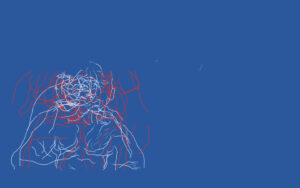
The origin of this experiment is twofold. First, there is a fascination with the phenomenon of camboys/girls, amateur models who choose to expose themselves online and live, through their webcams, usually in their bedrooms, offering their intimacy, in the broadest sense of the term, to anyone who wants to see it. Second, there is a desire to rediscover the use of drawing in my artistic practice, which for several years has developed mainly around video and live performance, both ephemeral mediums.
The “camboys” thus became my “living models,” as the expression goes. Working almost exclusively on the computer and only occasionally drawing on paper, sketching with pencil from life proved rather disappointing and of little interest, so I quite naturally chose to use my laptop for drawing.
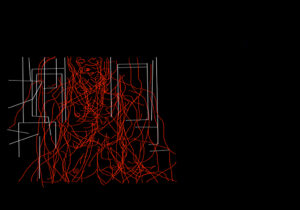
The setup is quite simple: I use software that allows me to draw directly on the screen while keeping the windows of open applications visible through transparency (in this case, my internet browser on a live cam site).
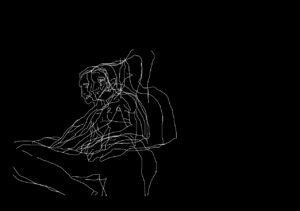
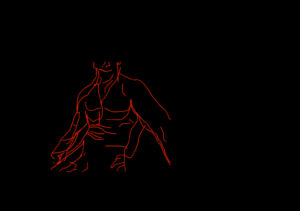
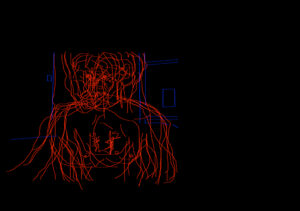
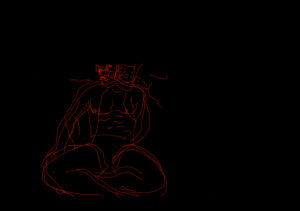
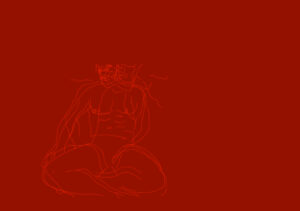
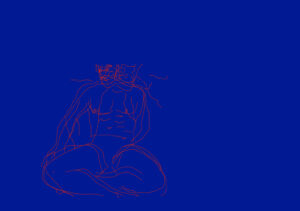
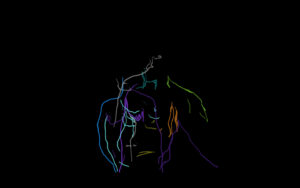
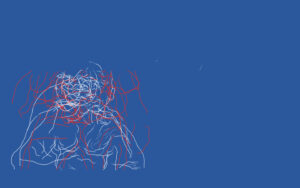
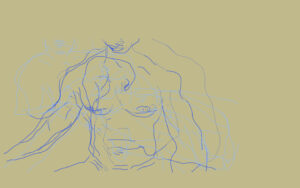
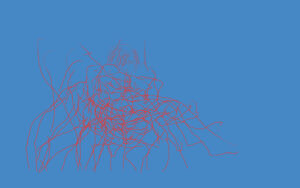
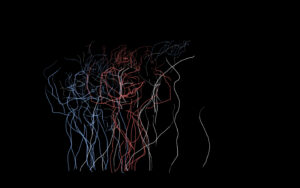
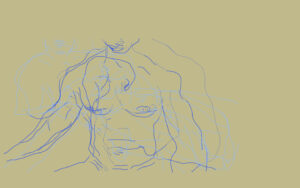
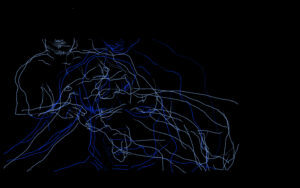
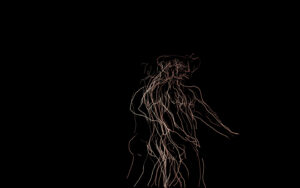
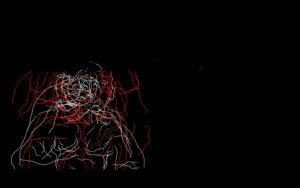
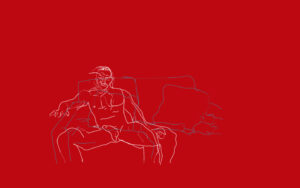
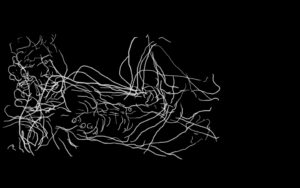
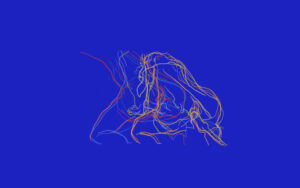
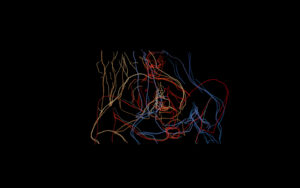
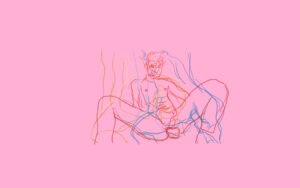
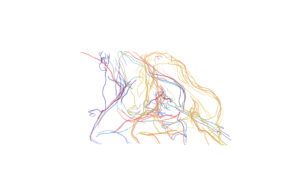
There is a simple rule in the drawing process (done directly on the screen, simply using the trackpad): always follow the contours of the model, even when it is moving, do not try to interpret, do not try to stylize, keep a naive gaze. The approach is naturalistic in the sense that I draw things as they are without any subjectivity, except for the color chosen for the line or background.
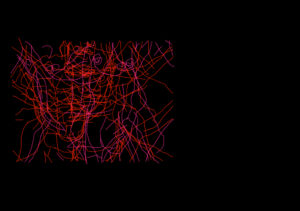
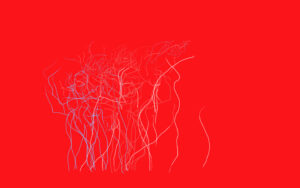
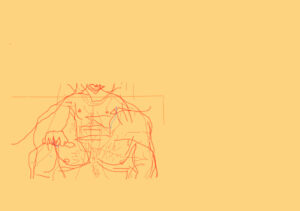
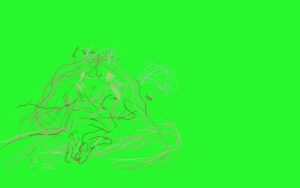
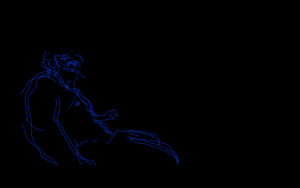
The result is a drawing with fragmented lines where parts of faces and bodies can be identified without ever being able to reconstruct a faithful portrait of the model. The screen offers both a distancing from the model and, at the same time, a kind of intimate relationship, as he is often in his room, which reveals certain details of his life.
The technical device almost evokes a caress when, during the creation process, the mouse pointer glides over the model’s image, guided by the finger on the trackpad. And yet the result offers a colder and more distant aesthetic. The final image is more like a trace, the “remnants” of the ephemeral video show, than a portrait in the strict sense of the word.